
from the land · coconuts in their natural rhythm
We arrived together, as part of the pause — not to learn something new, but to experience what already exists when time slows down.
Meeting David didn’t feel like a tour or a lesson. It felt like stepping into a way of life that hasn’t been rushed.
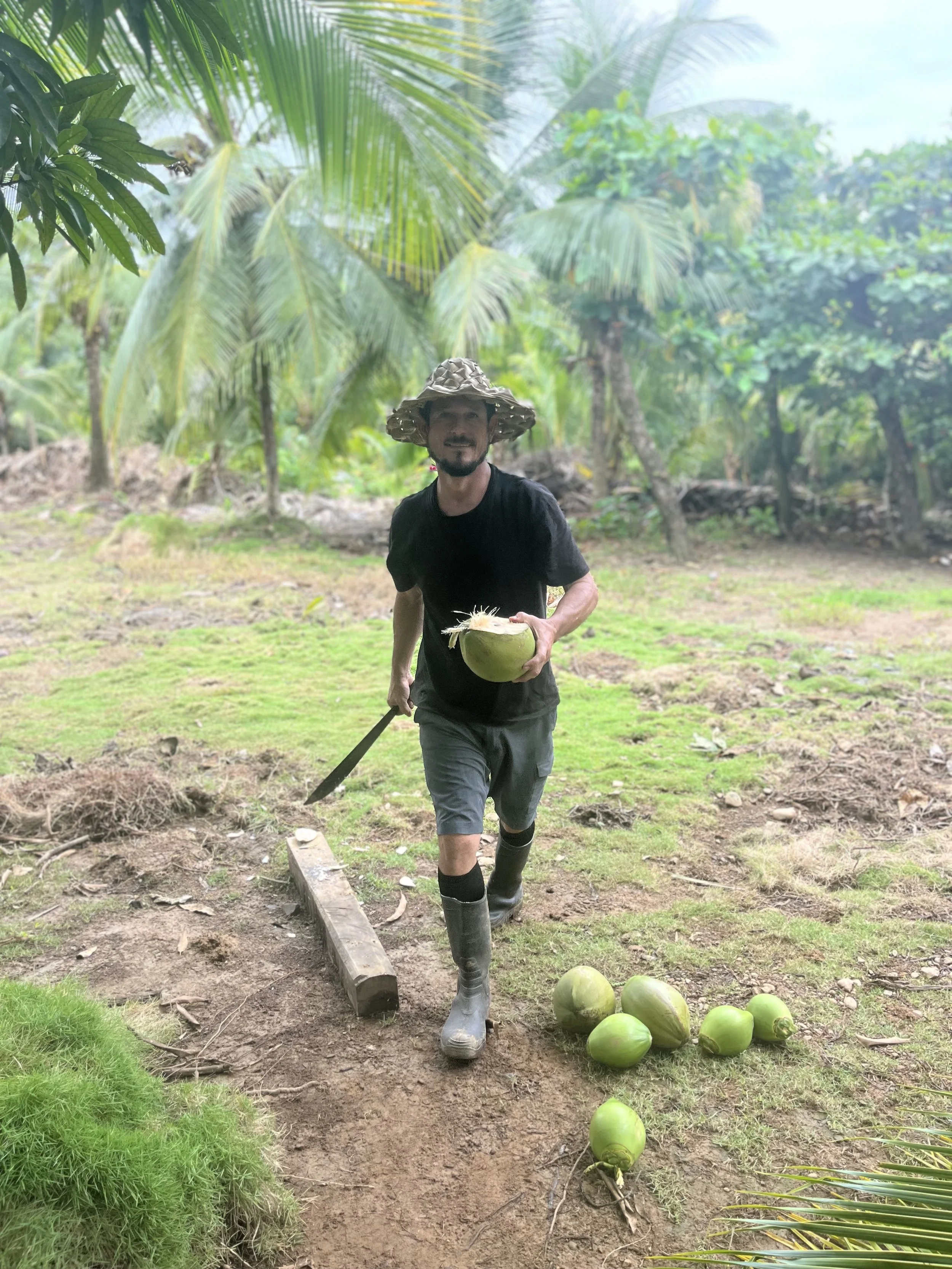
David Coco, founder of Coco IME, Punta Lagarta, Costa Rica
His workspace sits at the edge of the jungle in Punta Lagarta, in Costa Rica. Open air, filtered light, the sound of insects and birds moving through the day. There are no machines humming loudly, no sense of urgency. Just coconuts, hands, tools, and time.
David works with coconuts the way one might imagine they were always meant to be worked with — freshly harvested, cut open by hand, processed slowly, and never overheated or stripped of their natural qualities.
From these coconuts, he produces both raw and refined coconut oil, each created through simple, careful steps that preserve the integrity of the fruit.
There is nothing industrial about the process. No shortcuts. No attempt to improve what nature already provides.
Used for cooking, skin, hair, nourishment, and ritual, coconut oil is woven into everyday rhythms — something trusted, familiar, and respected.
“In Costa Rica, coconut is not a trend or a supplement. It’s part of daily life. It’s not labeled as ‘wellness.’ It simply is.”
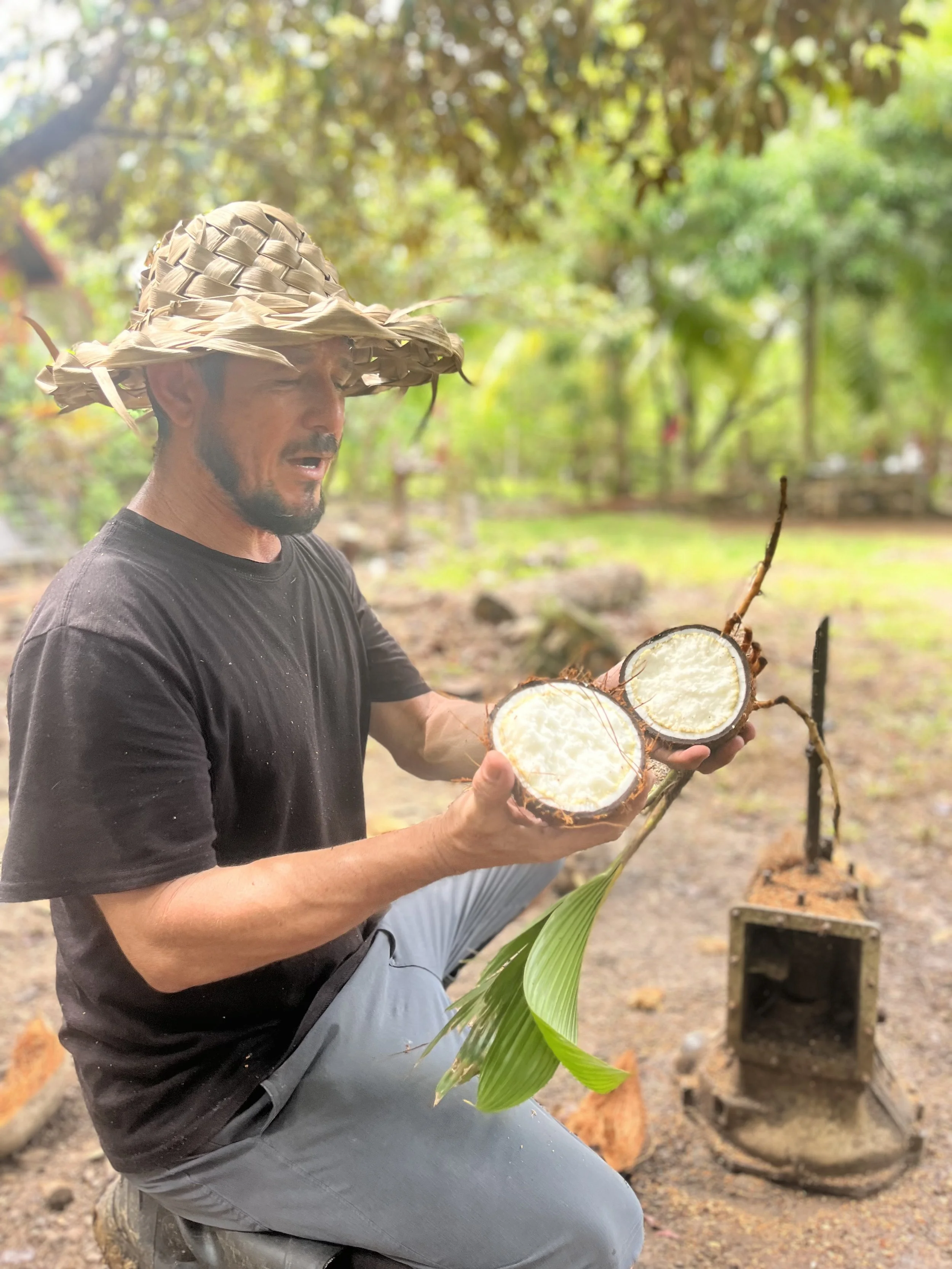
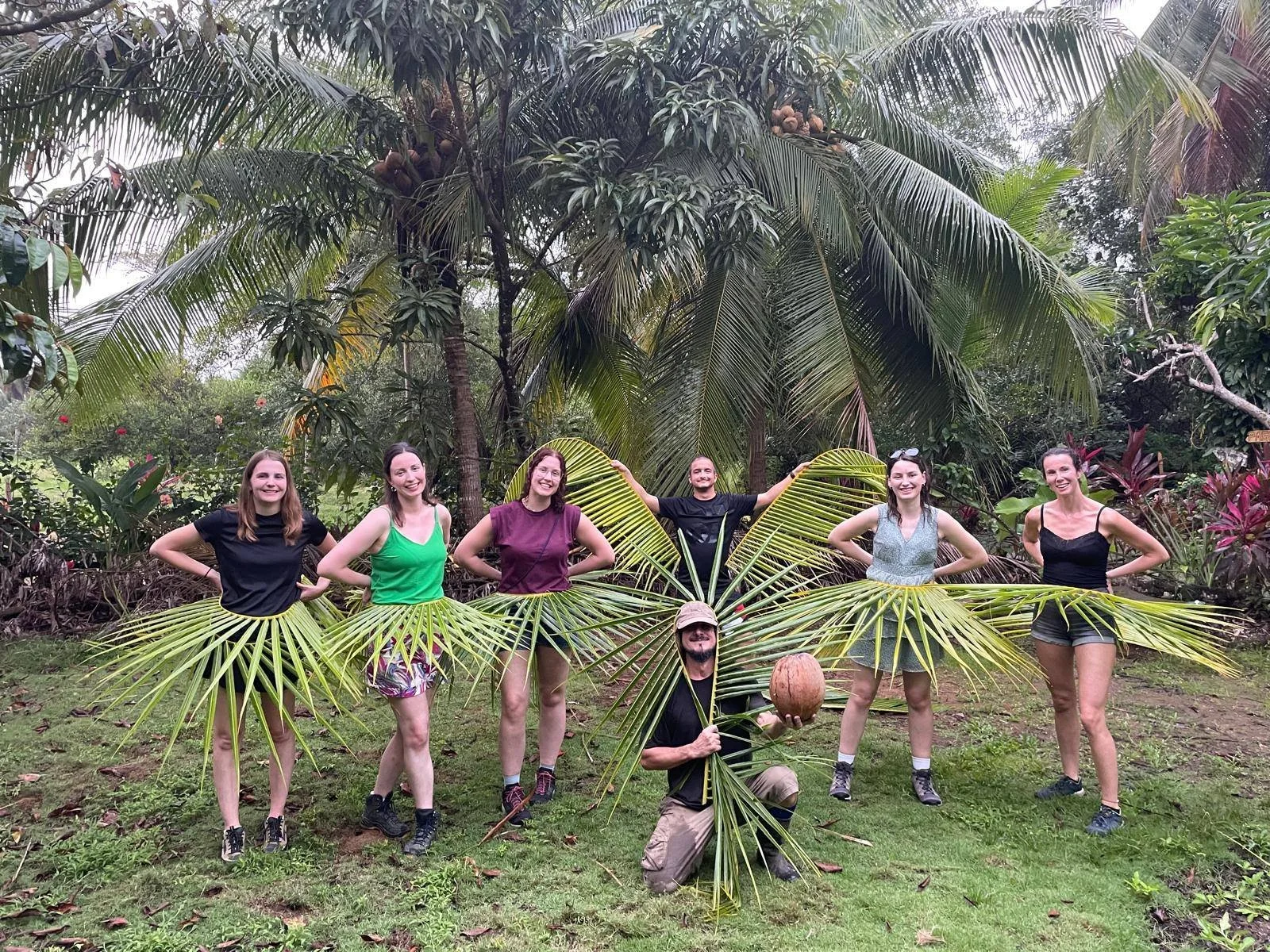
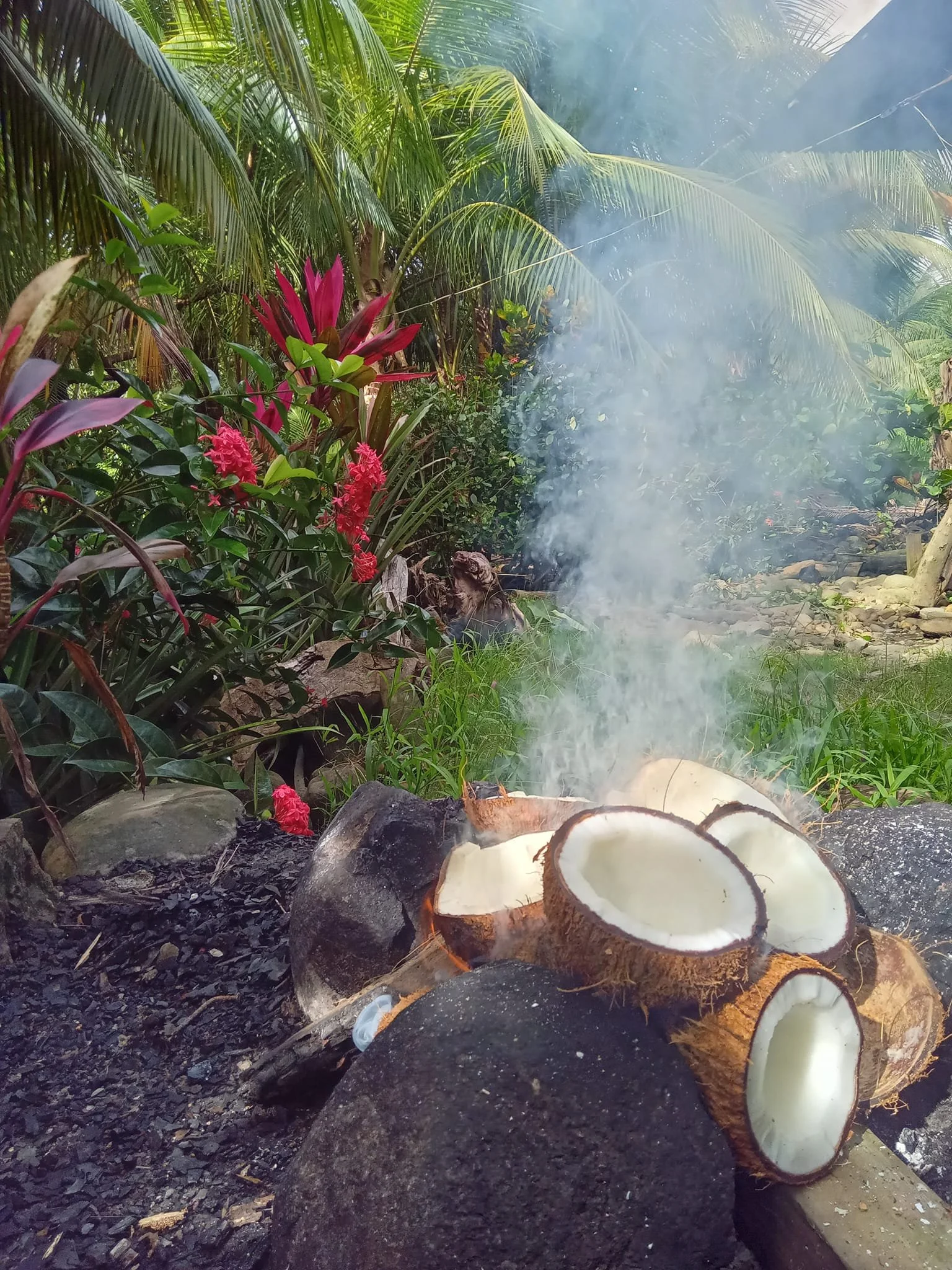
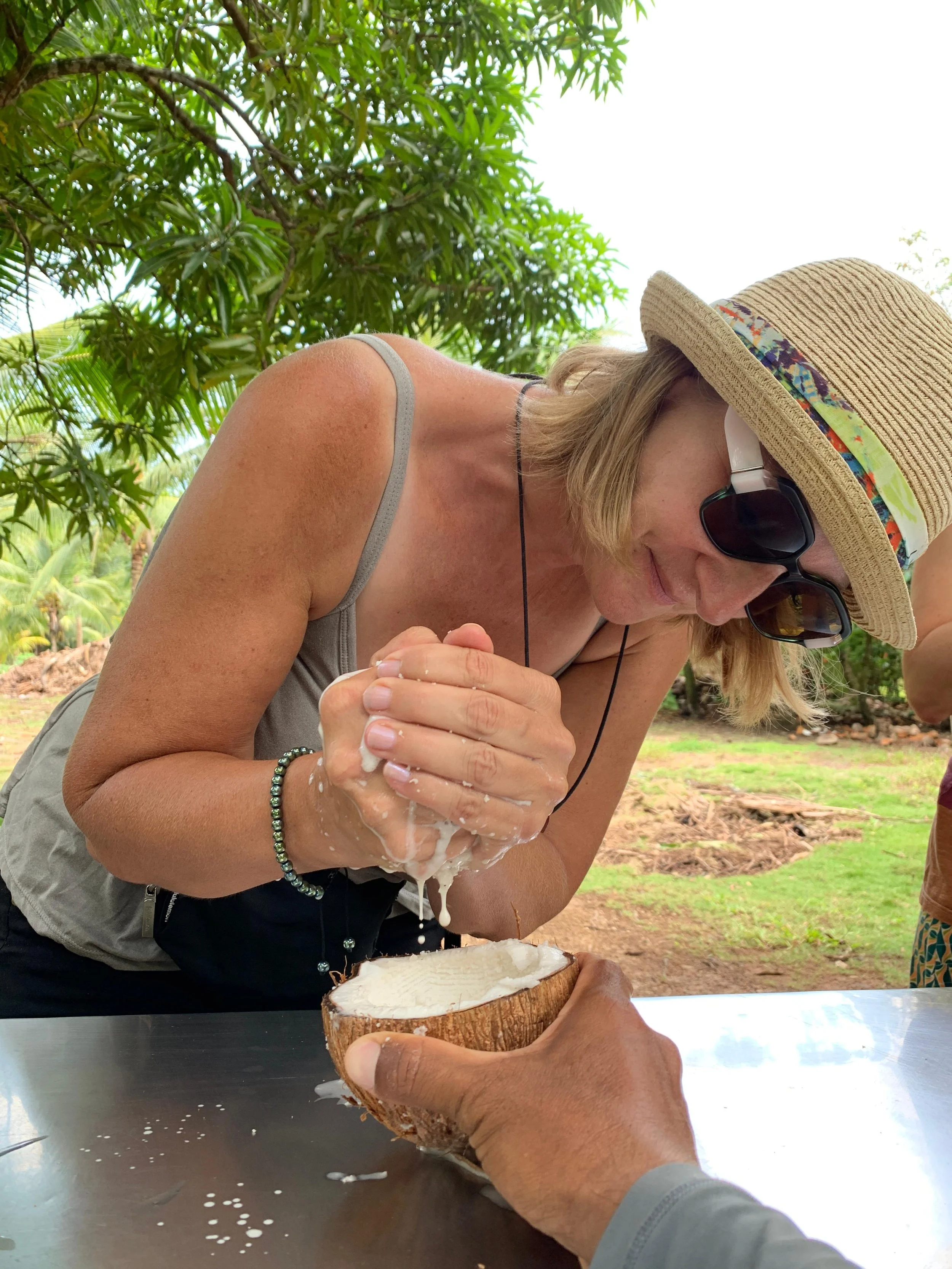
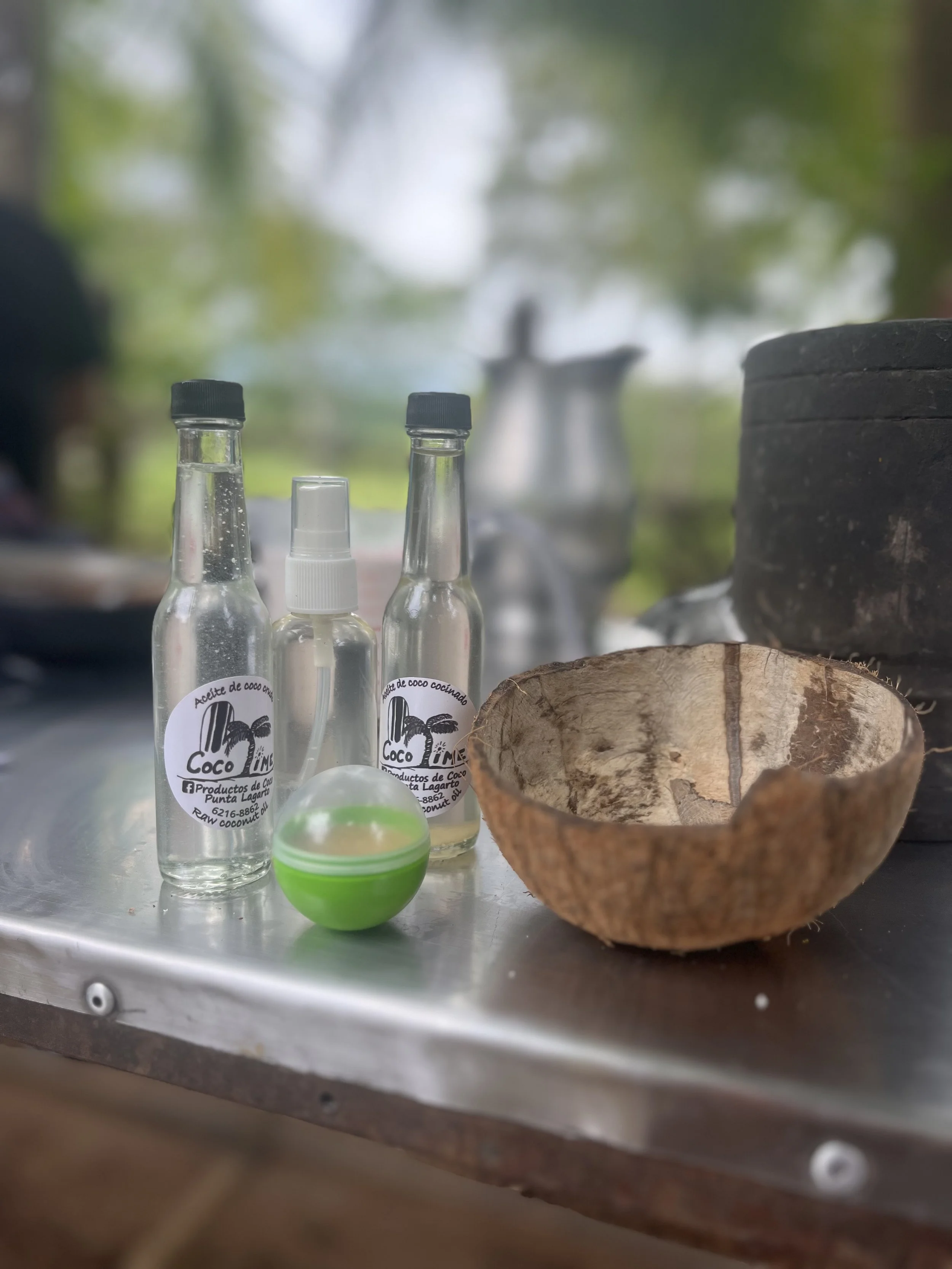
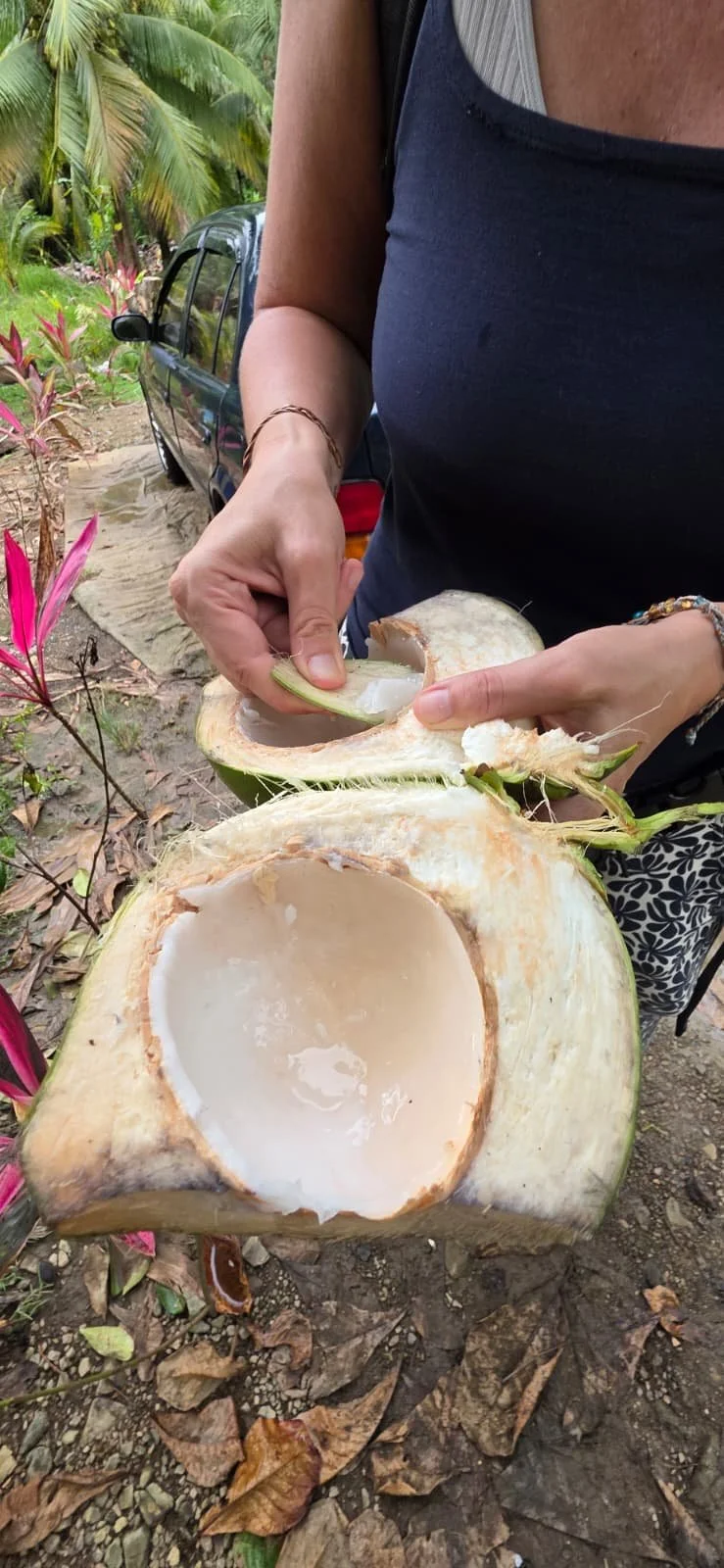
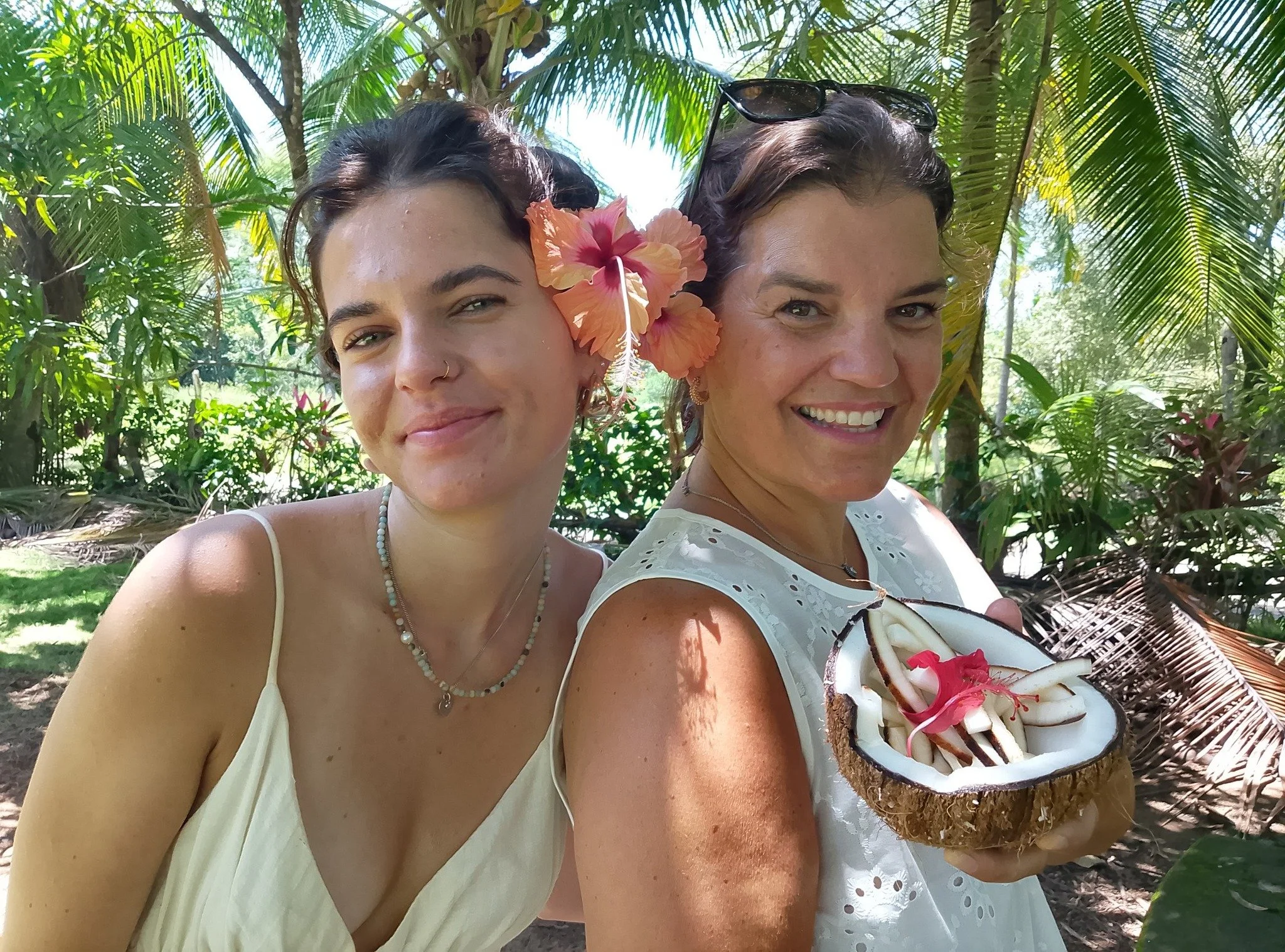
Spending time with David was a reminder that natural doesn’t mean complicated. It means attentive. It means knowing when to intervene and when to let things be. His work isn’t about producing more — it’s about staying aligned with the land, the climate, and the pace that allows quality to remain intact.
The coconuts are cracked, pressed, and separated in the open air. The oils are allowed to settle naturally. Heat is minimal, used only when needed, and always with restraint.
What remains is oil that still carries the scent and softness of the coconut itself. Alive, nourishing, and deeply grounding.
When asked why this way of working matters, he reflects quietly:
“This is why we care about where things come from. Not because we want to explain or teach, but because when something is made with presence, you can feel it. The body recognizes it. There’s a quiet trust that comes from knowing nothing has been forced.”
In a world that often rushes nourishment, this way of working feels like a pause in itself — one that reminds us that simplicity, when honored, is enough.
***
